Wat Pa Phon Phao: Five Floors of Murals and Quiet
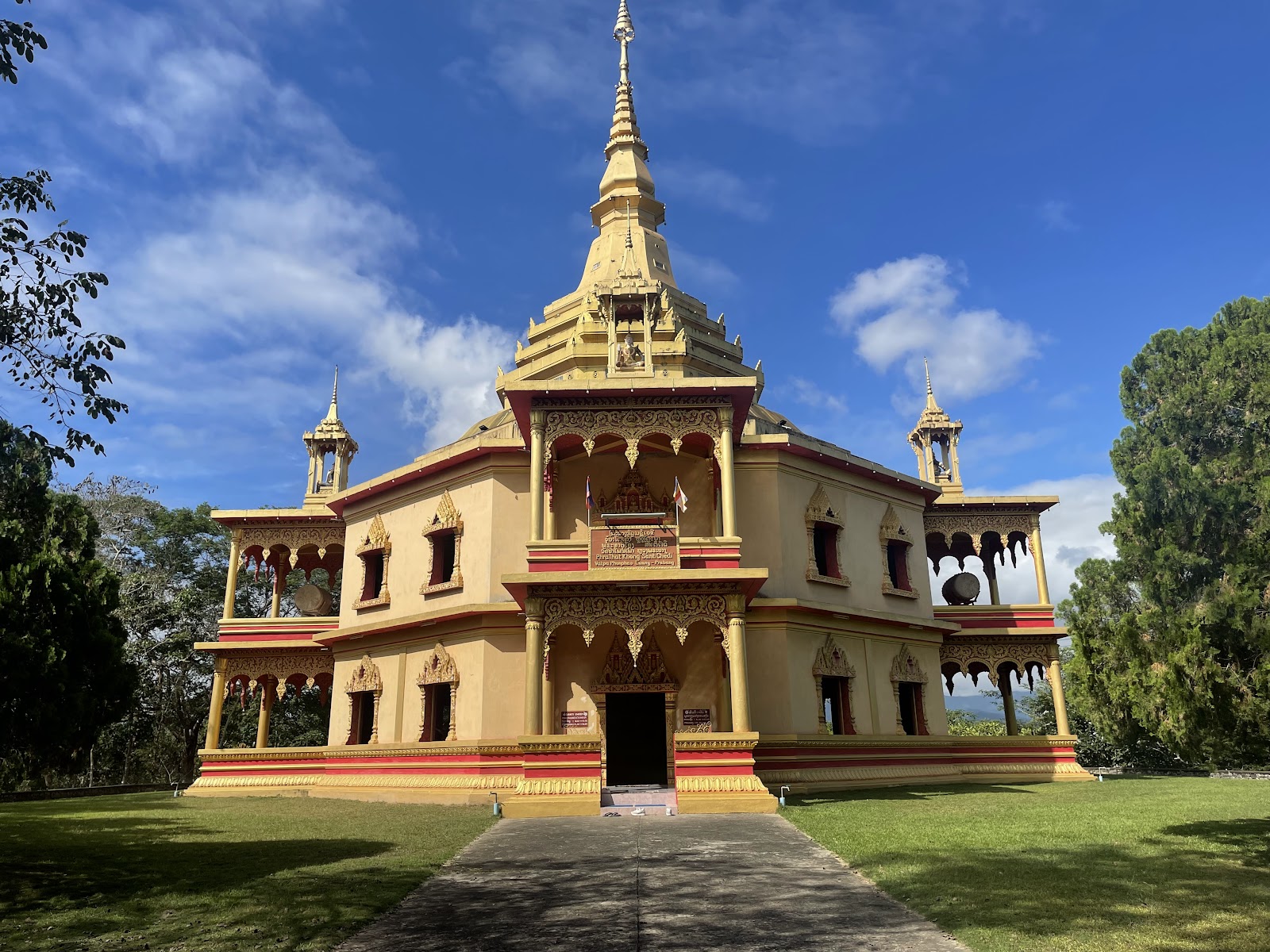
This distinctive Luang Prabang temple rewards the walk from the centre with layered interiors, affecting murals and balcony views.
More photos
Photos published by travelers on Google, not AI generated.
What stands out
- Five progressively smaller floors
- Murals with powerful human themes
- Quiet, contemplative atmosphere
- Two balconies overlooking the city
Worth knowing
- Some upper levels may be closed
- Murals may feel emotionally intense
- Trees partly obscure balcony views
Don't miss
What comes up most in public reviews
- Climb through all five floors if open
- Study the mural paintings
- Step onto both viewing balconies
Worth the trip?
Why it stands out
Wat Pa Phon Phao earns a Google rating of 4.4 from 272 reviews, with public feedback repeatedly distinguishing it from Luang Prabang’s many other temples. Its appeal lies less in a single decorative flourish than in the experience of moving upward through the building. Reviewers describe five progressively smaller floors, each with a different atmosphere, imagery and perspective.
Several visitors who had already seen numerous temples considered this one unusually memorable. The relative quiet also features prominently in feedback. Some reviewers encountered few or no other visitors, giving them time to study the interior without feeling hurried. That serenity is not guaranteed, but it appears to be an important part of the temple’s appeal when visitor numbers are low.
Inside the temple
The murals and painted imagery are the main reason to make the journey. Reviews describe scenes concerned with human suffering and difficult moral themes, rather than decoration that is merely pleasant or ornamental. For some visitors, these paintings proved deeply moving. Others found the subject matter emotionally intense enough to shorten their time inside.
The five-level arrangement gives the visit a clear sense of progression. Stairs lead through increasingly compact spaces, and each floor offers its own mood and visual details. Public feedback suggests that the full experience depends on how many levels are open during a particular visit. When access extends to the upper floors, visitors can see more of the mural cycle and reach the highest parts of the structure.
This is a temple that benefits from slow observation. The strongest reviews come from travellers who paid attention to the paintings, imagery and changing character of each floor, rather than treating it as a quick exterior photo stop.
Walk and views
Multiple reviewers place Wat Pa Phon Phao roughly 30 to 40 minutes on foot from central Luang Prabang. The walk requires more time and effort than visits to temples clustered in the centre, so it works best as a deliberate outing rather than an incidental stop between nearby sights.
Two balconies are mentioned in public feedback, with views back towards Luang Prabang. Trees can partly obscure the wider landscape, so the outlook should be treated as a pleasant addition rather than the sole reason to visit. The building’s interior, vertical layout and murals remain the stronger draw.
Who should visit
Wat Pa Phon Phao is best suited to travellers interested in Buddhist art, symbolic imagery and quieter religious spaces. It also offers a change of pace for visitors who feel they have seen enough of the more centrally located temples.
The walk and internal stairs may make it less suitable for anyone seeking a brief or low-effort attraction. The painted depictions of suffering may also be challenging for sensitive visitors. For those comfortable with both, the temple combines solitude, unusual architecture and serious visual storytelling in one of Luang Prabang’s more distinctive temple visits.
Plan the rest of the trip
Ask anything
Looking for somewhere else?
Keep exploring around Luang Prabang
More from Laos
Laos · ວຽງຈັນ
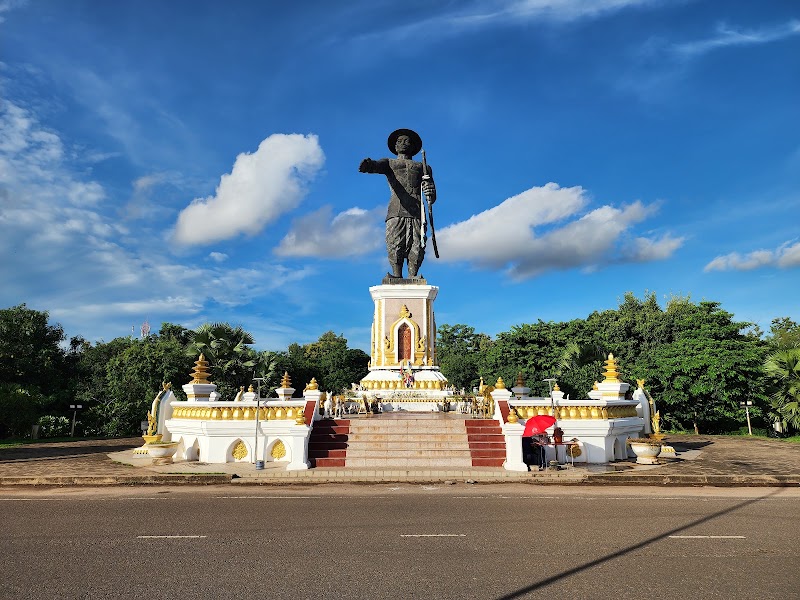
Statue of King Anouvong, Vientiane’s Riverside Landmark
A well-regarded monument in Chao Anouvong Park, best paired with an evening riverside walk and the nearby night market.
Laos · Vientiane
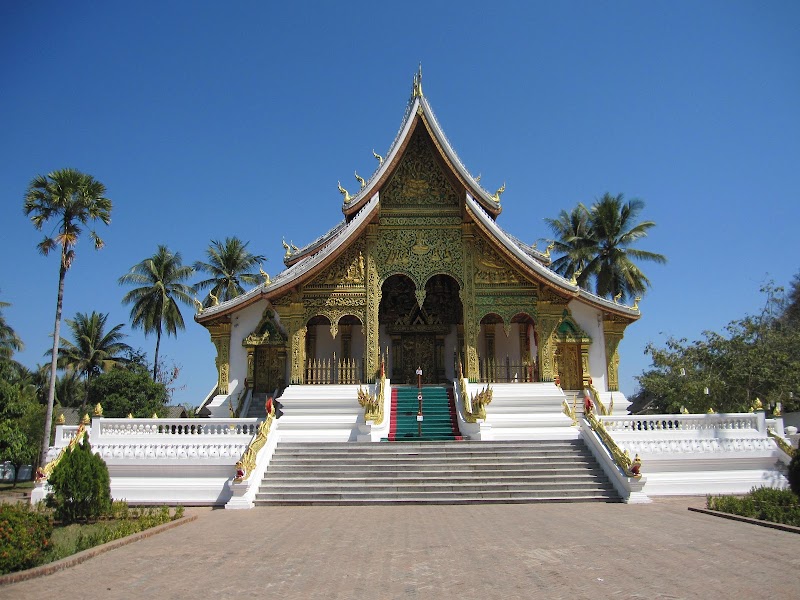
Ho Phrakeo Museum: A Brief, Quiet Look at Vientiane’s Past
This small religious art museum rewards visitors interested in Buddhist history, carved wood and Vientiane’s royal connections.
Laos · Vientiane
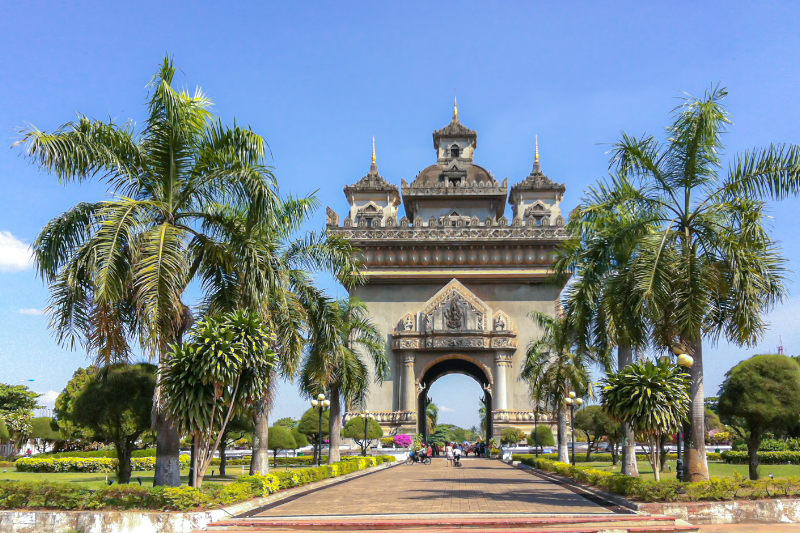
Patuxay Park: Vientiane’s Landmark for City Views and History
Patuxay Park pairs a symbolic Vientiane monument with fountains, open paths and a climb to broad city views.
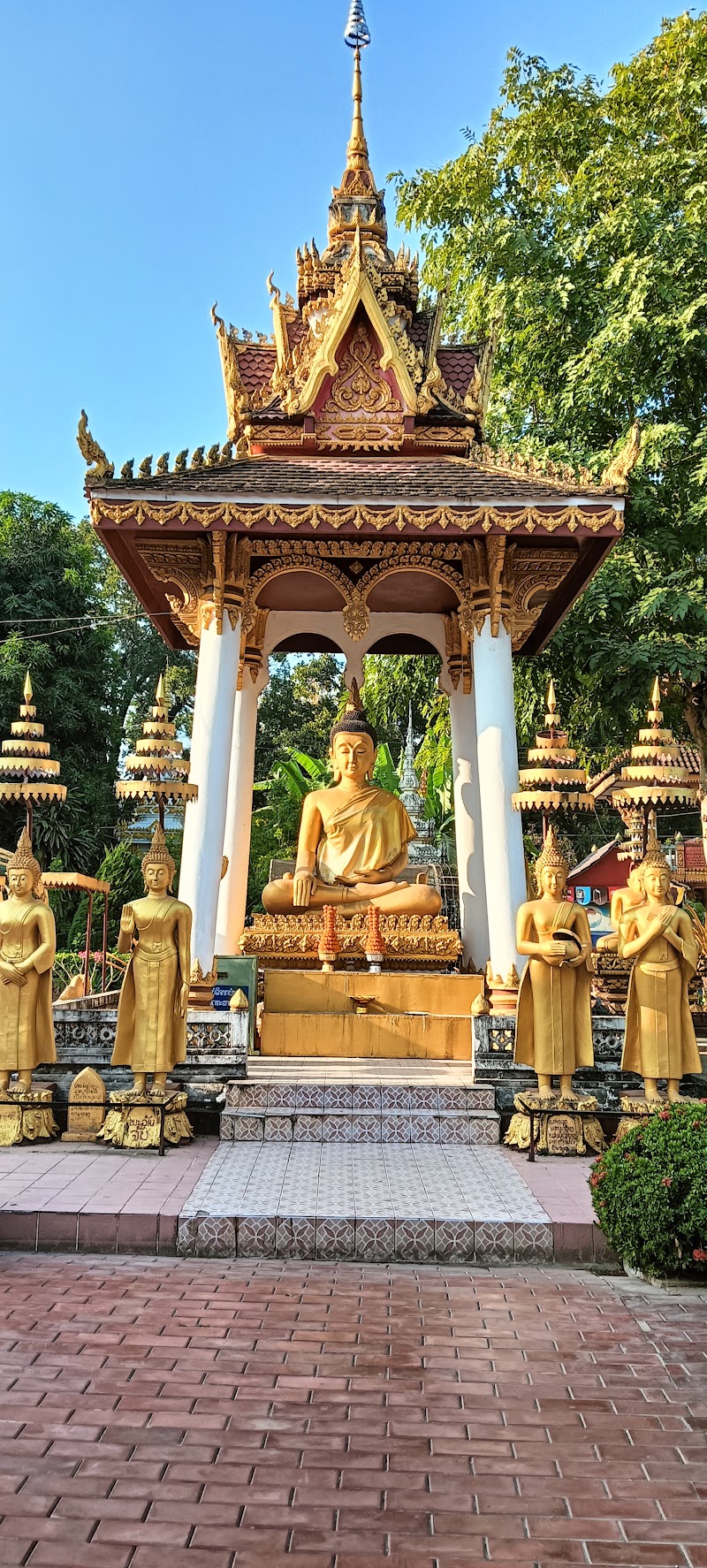
Laos · Vientiane
Wat Sisaket: Vientiane’s Surviving Temple Museum
Wat Sisaket pairs an early nineteenth-century temple with a museum of Buddha sculptures, making it a focused stop in central Vientiane.