Ulugh Beg Madrasa: Scholarship Written in Tilework
Registan’s oldest madrasa pairs monumental tilework with a compelling history of astronomy, mathematics and education.
More photos

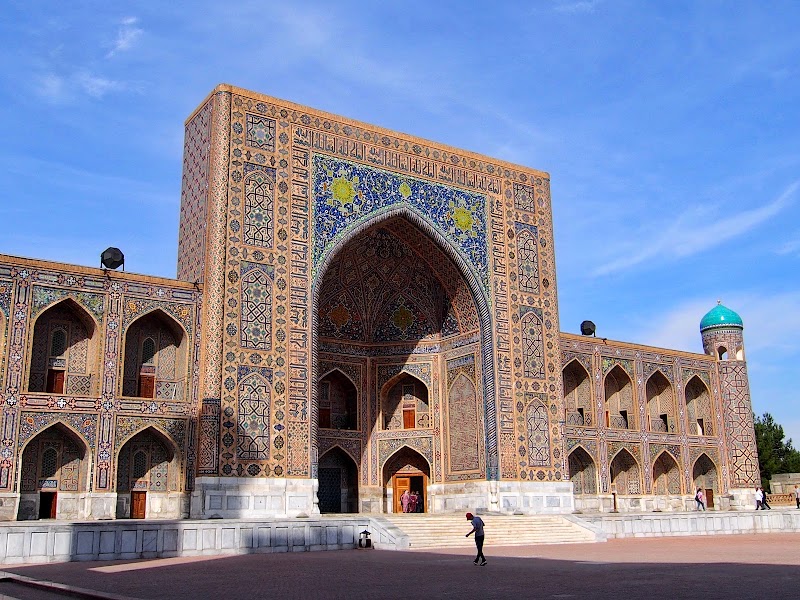
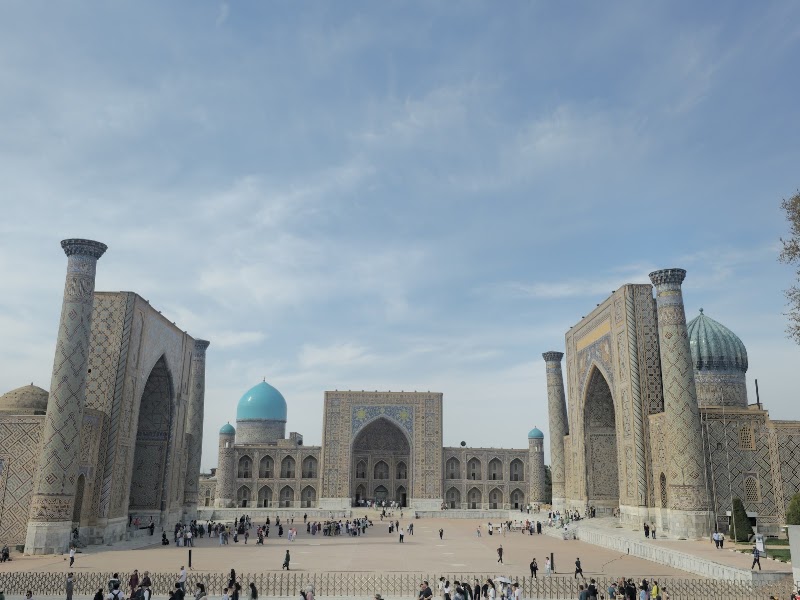
Photos published by travelers on Google, not AI generated.
What stands out
- Registan’s oldest madrasa
- Star-patterned entrance portal
- Historic centre of learning
- Atmospheric inner courtyard
- Possible upper-floor courtyard views
Worth knowing
- Renovation work may affect the visit
- Upper-floor stairs can be hard to find
- Ground-floor rooms contain shops
Don't miss
What comes up most in public reviews
- Study the astronomical motifs on the entrance
- View the facade from across Registan Square
- Walk through the inner courtyard
- Look for permitted second-floor access
- Read about Ulugh Beg before entering
Worth the trip?
Why it stands out
Public feedback consistently places Ulugh Beg Madrasa among the most impressive buildings in Registan Square. It holds a Google rating of 4.8 from 737 reviews, with visitors particularly praising its age, decorated entrance and scholarly history. Several reviewers consider it the most beautiful of Registan’s three madrasas, though that judgment is naturally subjective.
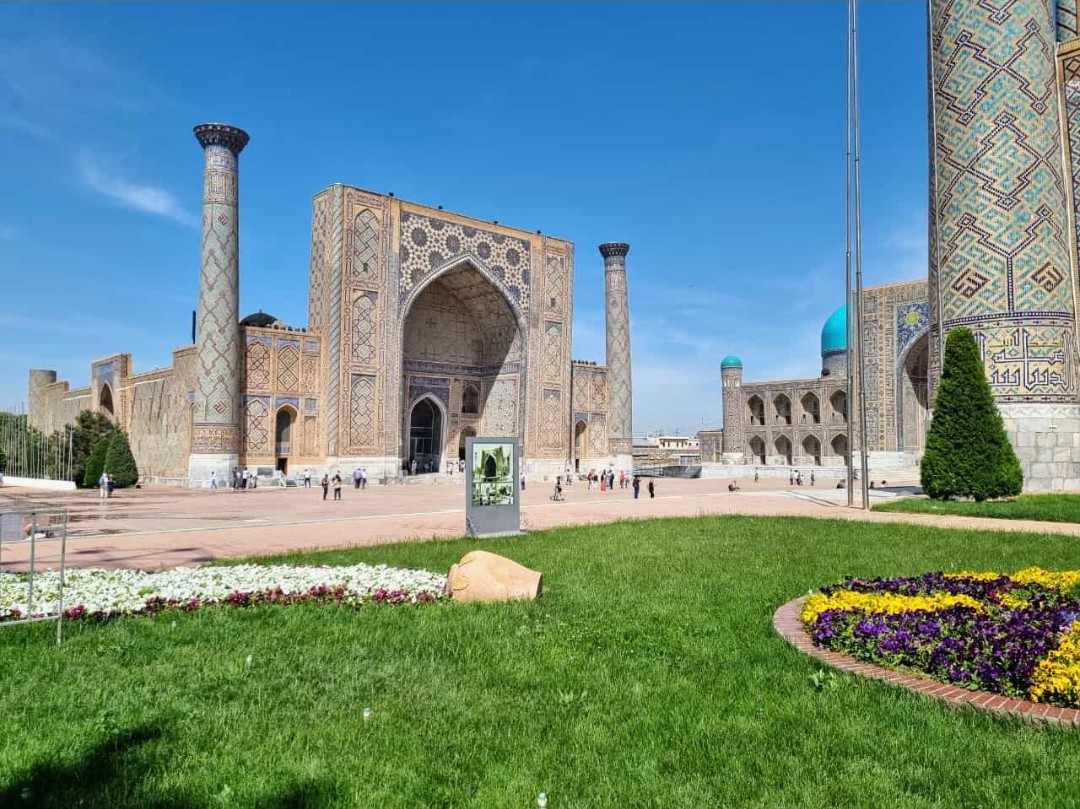
The madrasa stands on the left side of the Registan ensemble. Reviews usually date its construction to 1417–1420, during the rule of Ulugh Beg, while one account gives a completion date of 1421. Either way, it is the oldest of the square’s three monumental buildings. Its visibly uneven lines and slight lean are often noticed from outside, giving visitors a clear sense of the structure’s considerable age.
A school shaped by science
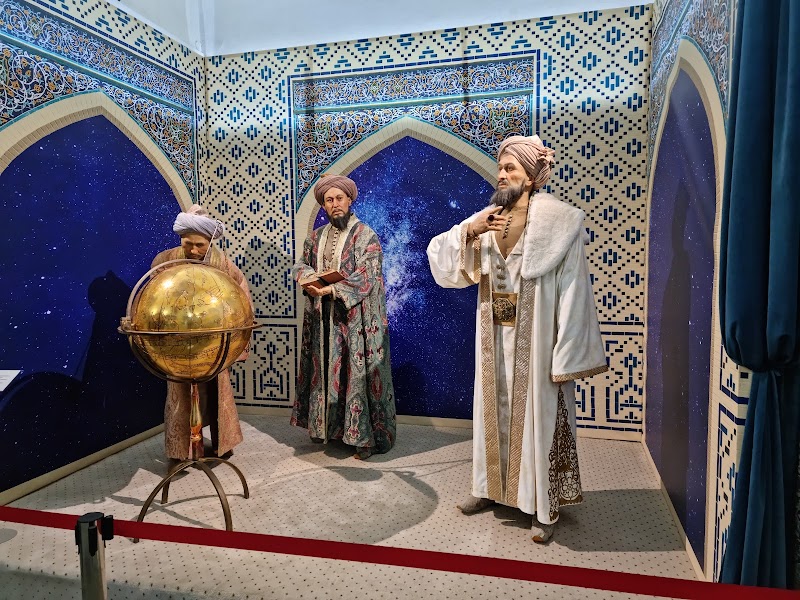
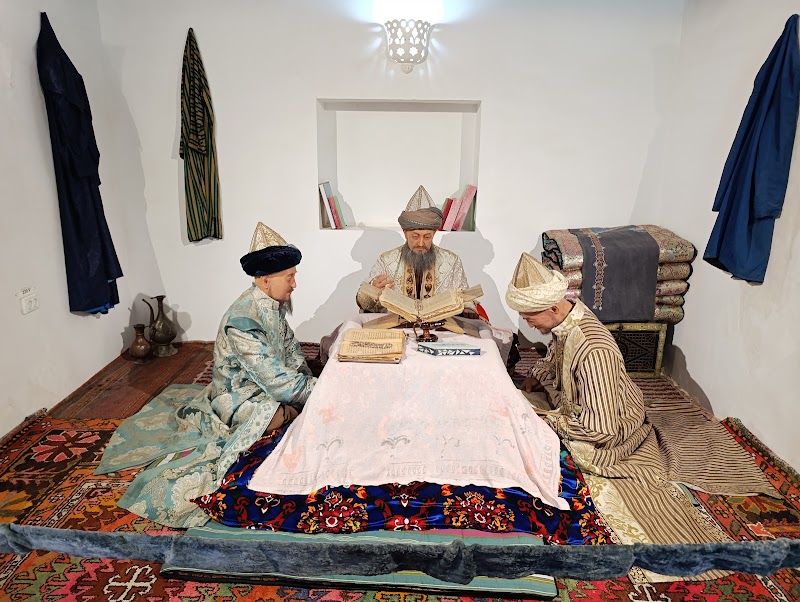
Ulugh Beg was a Timurid ruler, the grandson of Timur, and an important astronomer and mathematician. Reviewers repeatedly emphasize that the madrasa was intended as a centre of learning rather than simply an ornamental religious monument. Accounts describe religious and secular subjects being taught here, including mathematics and science.
That context adds meaning to the facade. Visitors point to the star-like patterns around the tall entrance portal, linking the decoration to Ulugh Beg’s astronomical interests. Reading about him before entering can make the geometry and celestial imagery easier to appreciate. Reviews also connect the madrasa with his wider support for scholarship in Samarkand, including the observatory associated with his astronomical work.
What the visit is like
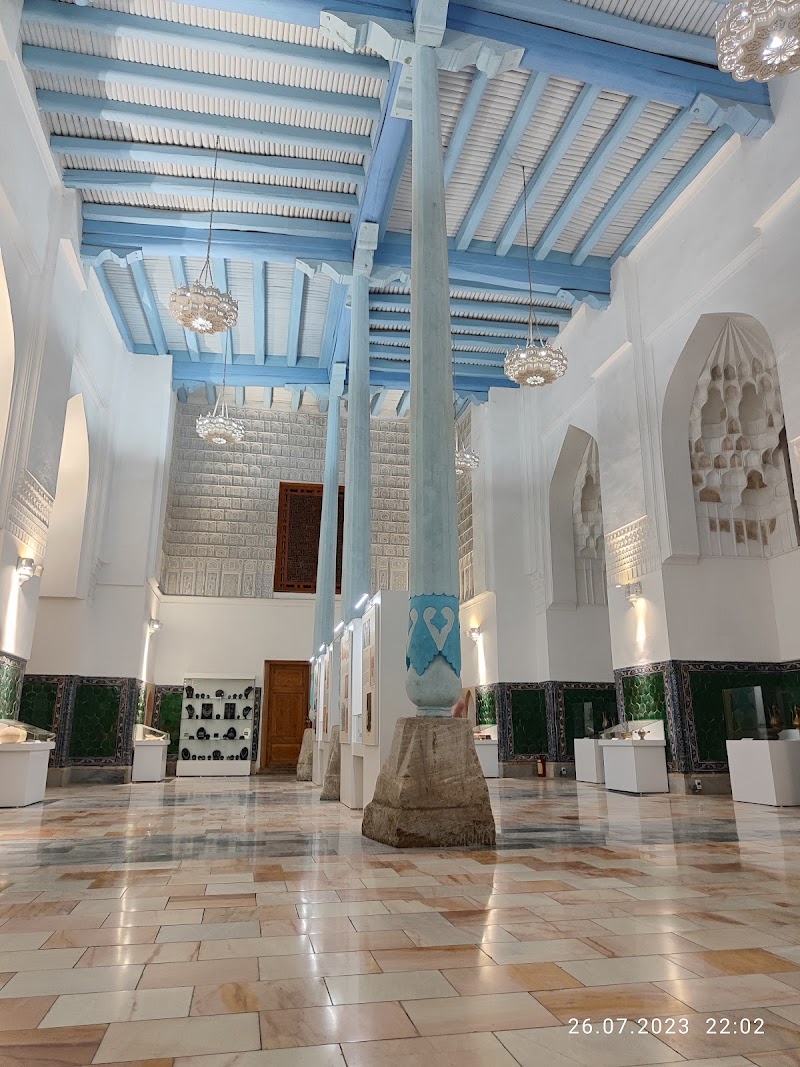
The main visual impact comes from the monumental entrance, richly patterned surfaces and enclosed courtyard. The exterior rewards a slow look from across Registan Square, where its proportions, decorated portal and slightly irregular structure are easiest to take in. Inside, the courtyard offers a more intimate perspective on the former school and its surrounding rooms.
Some reviewers report narrow, less obvious staircases near corner shops that lead to the second floor. Where access is open, the upper level provides a different view across the courtyard. Access should not be assumed, however, as routes may be difficult to spot or affected by current site arrangements.
Ground-floor rooms are described as being occupied by shops. These commercial spaces may lessen the sense of stepping into an untouched historic school, but the building’s architectural and educational significance remains clear.
Practical verdict
Ulugh Beg Madrasa works best as part of a broader Registan visit rather than as an isolated stop. Travellers interested in Timurid architecture, astronomy or the history of education are likely to find the most depth here. The facade can be admired quickly, but time spent examining its motifs and reading about Ulugh Beg makes the experience substantially richer.
One review encountered renovation work, so temporary disruption is possible. Even with shops and occasional conservation activity, the consensus is strongly positive: this is an essential part of understanding both Registan Square and Samarkand’s role as a historic centre of scholarship.
Ask anything
Looking for somewhere else?
Keep exploring around Samarqand
More from Uzbekistan
Uzbekistan · Shahrisabz
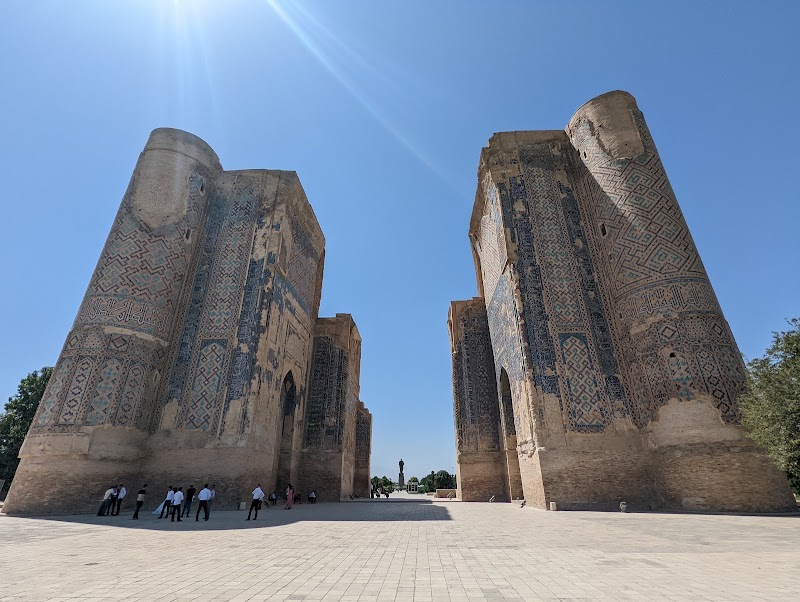
Ak-Saray Palace: Monumental Ruins in Shahrisabz
Timur’s ruined palace impresses with its towering portal and massive walls, though the journey from Samarkand divides opinion.
Uzbekistan · Samarqand
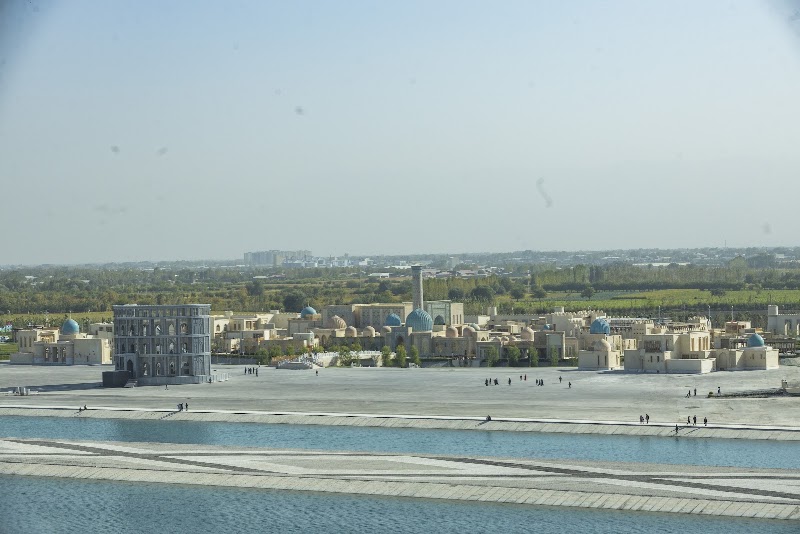
The Eternal City: a polished take on Silk Road Samarkand
The Eternal City is a polished Silk Road-themed ethnopark for photos, food and evening strolls, though reviews question its authenticity and convenience.
Uzbekistan · Khiva
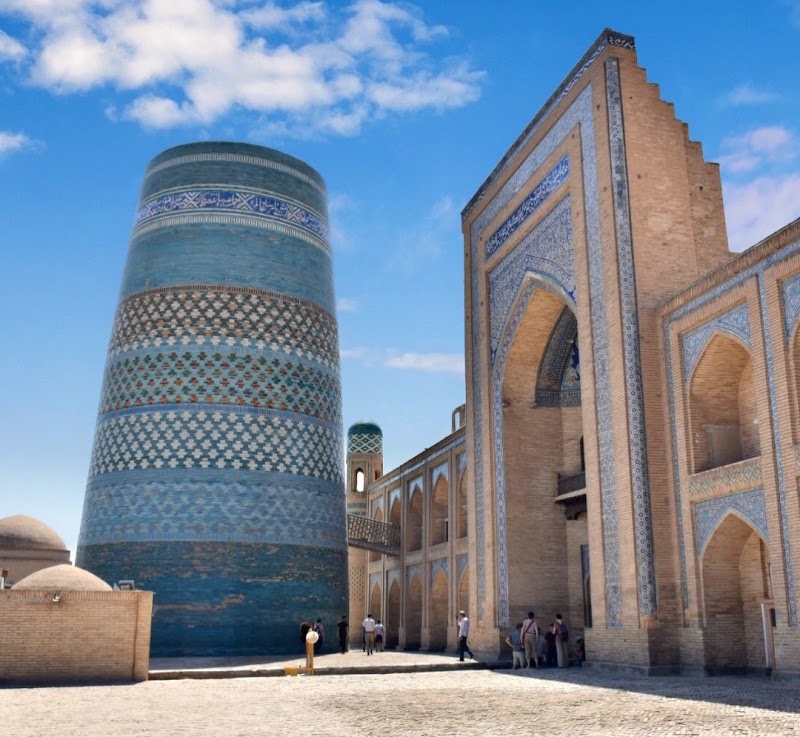
Kalta Minor Minaret: Khiva’s Unfinished Turquoise Icon
This broad, brilliantly tiled minaret near Ichan-Qala’s western gate is one of Khiva’s most recognisable landmarks and photo stops.
Uzbekistan · Buxoro
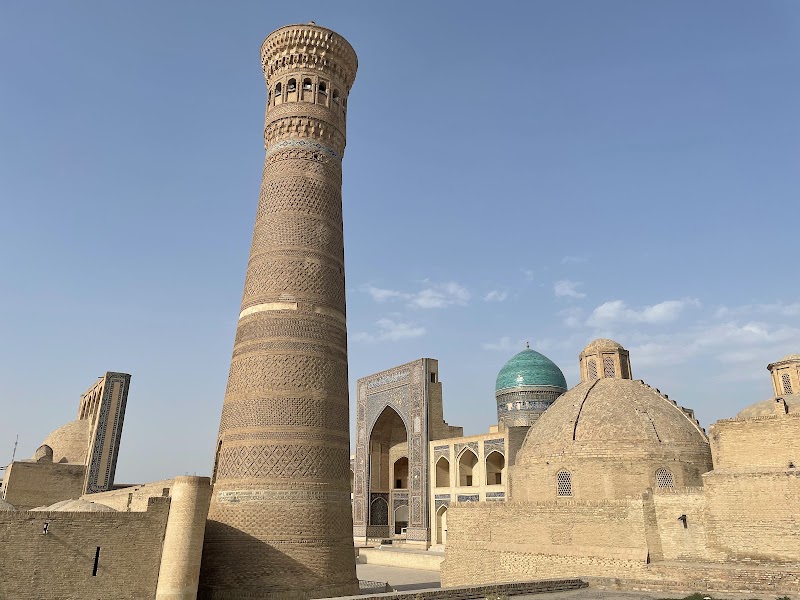
Kalan Minaret, Bukhara’s Defining Brick Landmark
Public reviews praise Kalan Minaret for its patterned brickwork, commanding presence and striking illumination after dark.