Sukhothai Historical Park: Temples, Ponds and Buddha Statues
Ancient temples, monumental Buddha statues and shaded cycling paths make Thailand’s former capital a rewarding historical landmark.
More photos
Photos published by travelers on Google, not AI generated.
What stands out
- Ancient temple ruins
- Giant Buddha statues
- Serene ponds and old trees
- Shaded cycling paths
- Spacious historical setting
Worth knowing
- The park is extensive
- Candlelit events may draw crowds
- Event schedules should be confirmed
Don't miss
What comes up most in public reviews
- Cycle between the temple ruins
- See the giant Buddha statues
- Pause beside the serene ponds
- Follow the shaded paths
Worth the trip?
Why the park stands out
Sukhothai Historical Park earns a Google rating of 4.7 from 18354 reviews, with public feedback repeatedly praising its combination of historical weight, monumental architecture and calm surroundings. Travellers describe it as one of Thailand’s most important ancient sites, associated with the first Thai kingdom and the early development of Thai culture.
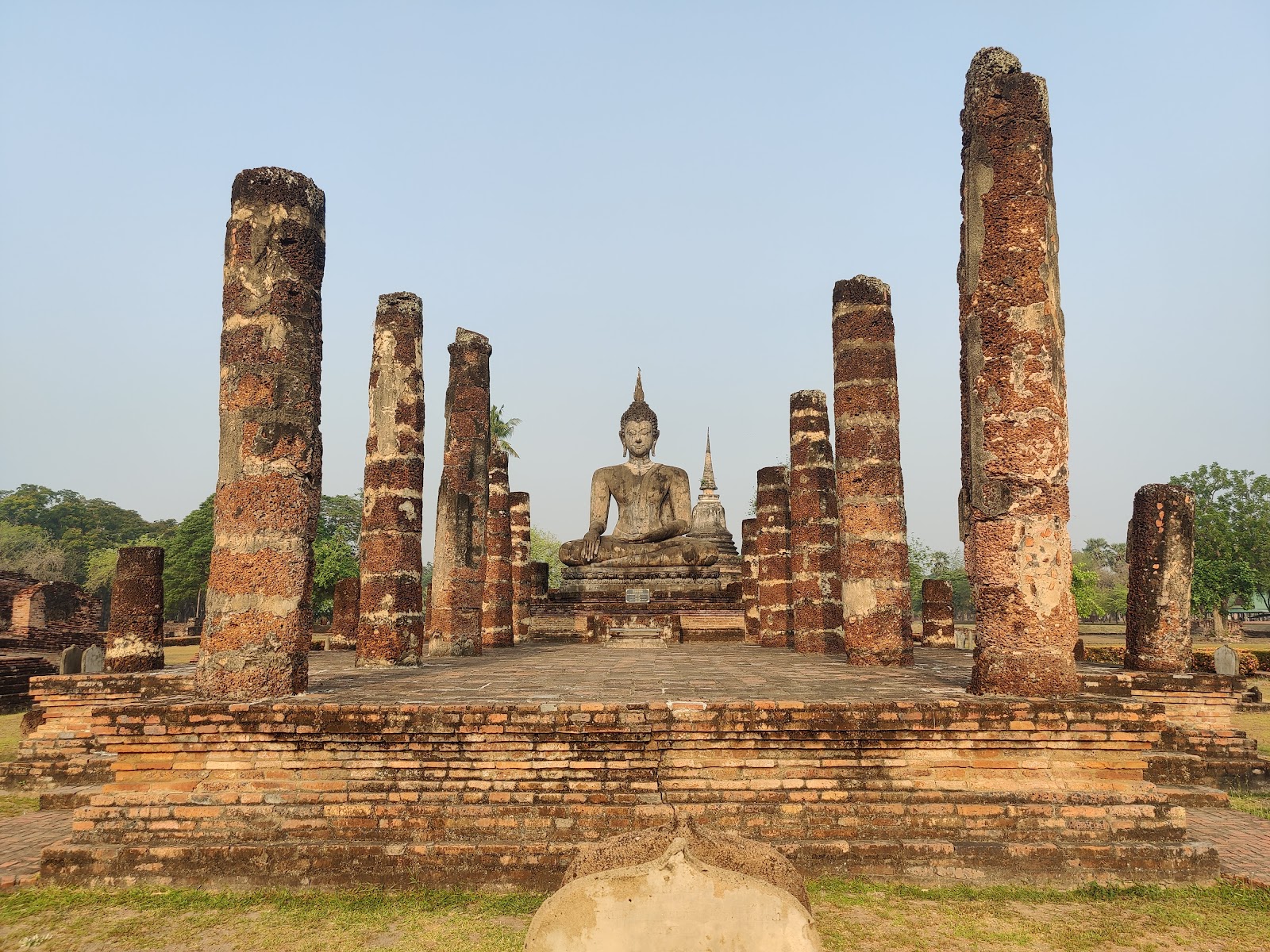
The ruins are not confined to a single monument. Reviewers highlight numerous temples, large Buddha statues, old trees and reflective ponds distributed across an expansive archaeological landscape. That scale helps the former capital feel like a place to explore rather than a single attraction to photograph and leave. Wide open areas also give major structures room to make an impression.
Several reviewers describe the site as a UNESCO World Heritage Site and commend the preservation of its early Thai architecture. History enthusiasts appear particularly taken with the sense of continuity, noting that parts of the city date back roughly 800 years and that Sukhothai served as a capital for around 140 years.
Exploring the ruins
Cycling is the most consistently recommended way to cover the park. Reviews mention nearby bicycle rental shops and describe shaded paths linking temples, ponds and statues. The relatively relaxed layout appears well suited to riders who prefer to pause often, inspect individual ruins and move at their own pace.
Other transport options mentioned in public feedback include private golf carts and an electric tram that drops visitors at different areas. These may suit travellers who do not want to cycle or who need help covering the park’s considerable footprint. Walking can still be rewarding, particularly around the central monuments, but reviews make clear that the wider complex is extensive.
A half-day allows time for the principal ruins, although historically curious visitors may want a full day for slower cycling and more detailed stops. The appeal comes from the whole setting as much as any single temple: ancient brickwork framed by mature trees, tranquil water and Buddha figures on a monumental scale.
Atmosphere and timing
Reviewers repeatedly value the park’s peaceful character. Shaded routes and generous spacing create breathing room between monuments, while the ponds soften the exposed archaeological landscape. The experience seems especially contemplative when visitor numbers fall.
One account describes an evening candlelight procession, when thousands of lanterns illuminated the ruins. The traveller arrived after most participants had finished and found the quieter atmosphere especially memorable. As the reviews do not establish how regularly such events occur, visitors interested in a candlelit evening should confirm the local programme rather than assume it forms part of everyday admission.
The verdict
Sukhothai Historical Park works best for travellers prepared to give it time. Its strongest qualities are the breadth of the ruins, the graceful early architecture and the option to explore by bicycle beneath large trees. The size of the site requires some planning, but that same scale creates the spacious, unhurried mood praised across reviews.
It is an essential stop for history-focused itineraries and remains accessible to casual visitors through cycling, tram and golf-cart options. The giant Buddha statues, temple ruins and serene ponds provide the clearest visual highlights, while the former capital’s wider story gives them context.
Plan the rest of the trip
Ask anything
Looking for somewhere else?
Keep exploring around Tambon Mueang Kao
More from Thailand

Thailand · Khwaeng Pathum Wan
SEA LIFE Bangkok: An Underwater Break at Siam Paragon
SEA LIFE Bangkok offers an immersive aquarium visit beneath Siam Paragon, with a glass tunnel, sharks, rays and a welcome escape from Bangkok’s heat.

Thailand · Lumphini
Lumphini Park: Bangkok’s Green Space for Walks and Wildlife
Public reviews describe Lumphini Park as a calm, active escape in central Bangkok, with shaded paths, lakeside views, local exercise groups and monitor lizards.

Thailand · Na Chom Thian
Nongnooch Pattaya Garden: A Full Day of Big Attractions
Public reviews praise the extensive, carefully maintained gardens, with dinosaur displays, elevated walkways and family-friendly shows leading the experience.

Thailand · Khwaeng Wat Arun
Wat Arun, Bangkok’s Porcelain-Clad Riverside Landmark
Public reviews praise Wat Arun’s intricate architecture, river views and photography appeal, while warning that heat, crowds and steep steps can shape the visit.