Si Thep Historical Park: Dvaravati Ruins on a Grand Scale
Expansive ruins, laterite monuments and spiritual details make Si Thep a rewarding stop for travellers interested in Thailand’s early history.
More photos
Photos published by travelers on Google, not AI generated.
What stands out
- Expansive ancient city remains
- Dvaravati architecture and art
- Laterite structures and stucco reliefs
- Open grounds with strong photo opportunities
- UNESCO World Heritage recognition
Worth knowing
- Daytime heat across open grounds
- Limited English-language interpretation
- Some visitors question comparative value
Don't miss
What comes up most in public reviews
- Sacred Arch of the Small Prang
- Shiva, Uma and Nandi lintel carving
- Dvaravati stucco reliefs
- Ancient temples and mounds
Worth the trip?
What public reviews reveal
Si Thep Historical Park has a Google rating of 4.6 from 2884 reviews. Much of the praise centres on the same points: historical importance, generous grounds and ancient architecture. The former city, now recognised as a UNESCO World Heritage Site, is also valued for the window it opens onto Dvaravati culture and the civilisations that came before the Khmer era.
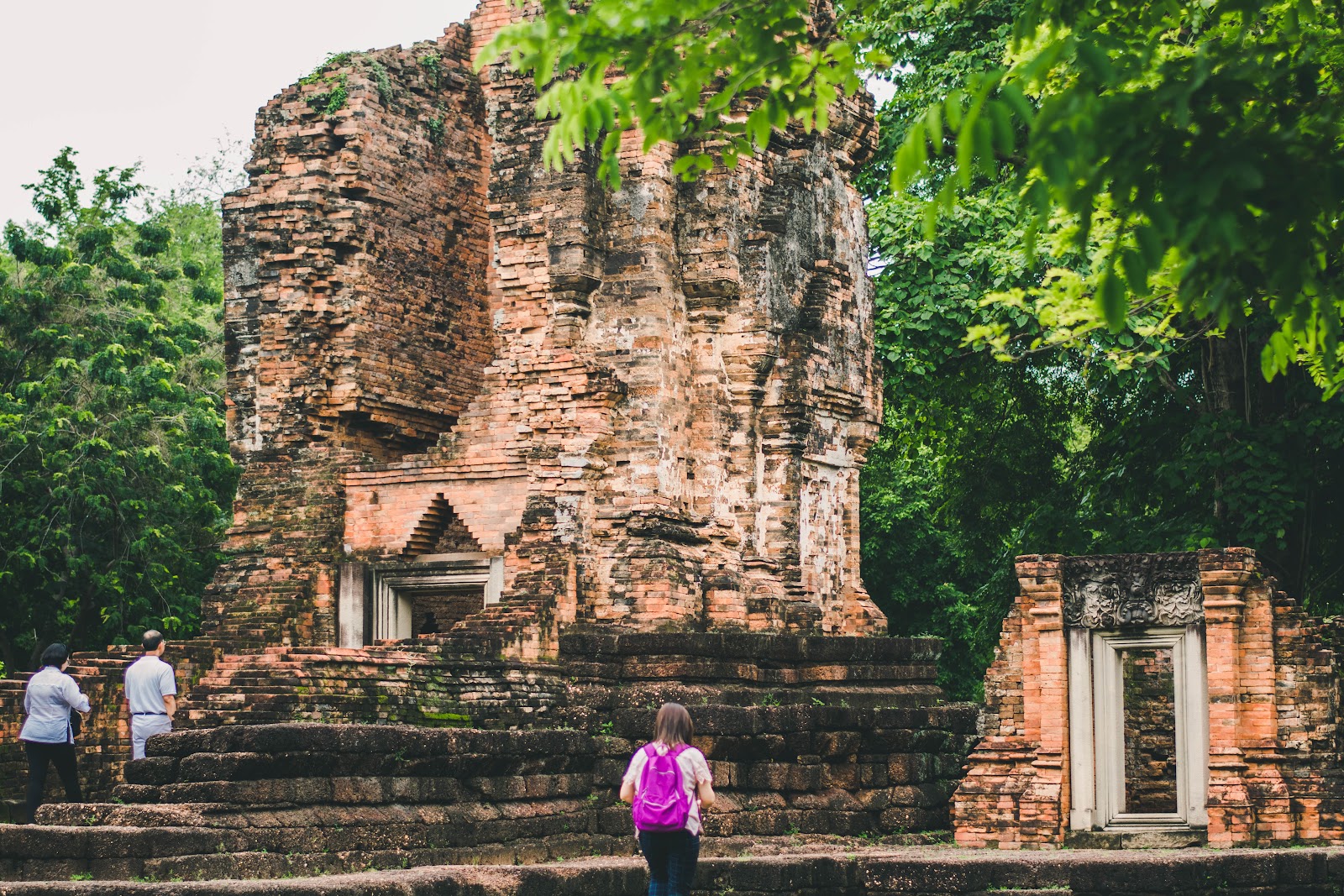
This is not a site built around one headline monument. Reviewers instead describe an atmospheric archaeological landscape, spread across temples, stone towers and mounds. There is space around the surviving structures, and visitors can wander without being pushed along a tightly controlled route. Several reviews mention the feeling of entering an inhabited city from another period. The sheer scale helps, as does the relative preservation of the ruins.
Architecture and cultural interest
Architecture is the main draw here. Public reviews point to laterite construction, high-relief stucco and the mix of Dvaravati design with later Angkor-related influences. Travellers who know little about Dvaravati art get a physical introduction to an important period in Thailand’s cultural development. The remains are incomplete, but their age, layout and stylistic details still convey the significance of the former city.
One particularly detailed review focuses on the Sacred Arch of the Small Prang. The lintel shows Shiva holding Uma while riding the sacred bull Nandi. That reviewer also recounts a local belief: passing through the doorway provides spiritual protection from bad luck or negative energy. It is local tradition rather than an established claim, though it gives an added dimension to a monument already distinguished by its carving.
Photography comes up often too. According to reviewers, the open grounds and monumental remains create attractive views. There is a trade-off. The strongest visual experience also means exposure to the sun.
Practical experience
Heat is the clearest practical issue in the available feedback. Daytime conditions can become uncomfortable, especially in the open areas, which makes an earlier visit the more sensible option. Water and sun protection should help visitors take in the grounds without having to rush.
Interpretation draws a less consistent response. At least one reviewer found the English-language support limited and felt this made it harder for international visitors to understand the site in depth. Anyone with a serious interest in archaeology may get more from the visit by reading about Dvaravati history beforehand.
Comparative value is debated as well, with one visitor saying they preferred another nearby structure. Still, the wider review pattern is positive. Travellers interested in history praise Si Thep for its authenticity and scale, and for the way its architectural fragments connect with the story of an early urban civilisation.
Editorial verdict
Si Thep works best as an archaeological landscape, not a quick photo stop. Its appeal comes from walking between scattered ruins, picking out carved and stucco details, then placing those remains within Thailand’s pre-Khmer history. Some visitors may want more context because English interpretation is limited. Even so, the strong public rating and repeated praise for the architecture support its case as a compelling half-day outing for culturally curious travellers.
Plan the rest of the trip
Ask anything
Looking for somewhere else?
Keep exploring around Tambon Si Thep
More from Thailand

Thailand · Khwaeng Pathum Wan
SEA LIFE Bangkok: An Underwater Break at Siam Paragon
SEA LIFE Bangkok offers an immersive aquarium visit beneath Siam Paragon, with a glass tunnel, sharks, rays and a welcome escape from Bangkok’s heat.

Thailand · Lumphini
Lumphini Park: Bangkok’s Green Space for Walks and Wildlife
Public reviews describe Lumphini Park as a calm, active escape in central Bangkok, with shaded paths, lakeside views, local exercise groups and monitor lizards.

Thailand · Na Chom Thian
Nongnooch Pattaya Garden: A Full Day of Big Attractions
Public reviews praise the extensive, carefully maintained gardens, with dinosaur displays, elevated walkways and family-friendly shows leading the experience.

Thailand · Khwaeng Wat Arun
Wat Arun, Bangkok’s Porcelain-Clad Riverside Landmark
Public reviews praise Wat Arun’s intricate architecture, river views and photography appeal, while warning that heat, crowds and steep steps can shape the visit.