Lotus Square: Macau’s Golden Lotus Landmark
A compact Macau landmark for daytime photographs, a quick cultural stop and an easy pairing with nearby museums and Fisherman’s Wharf.
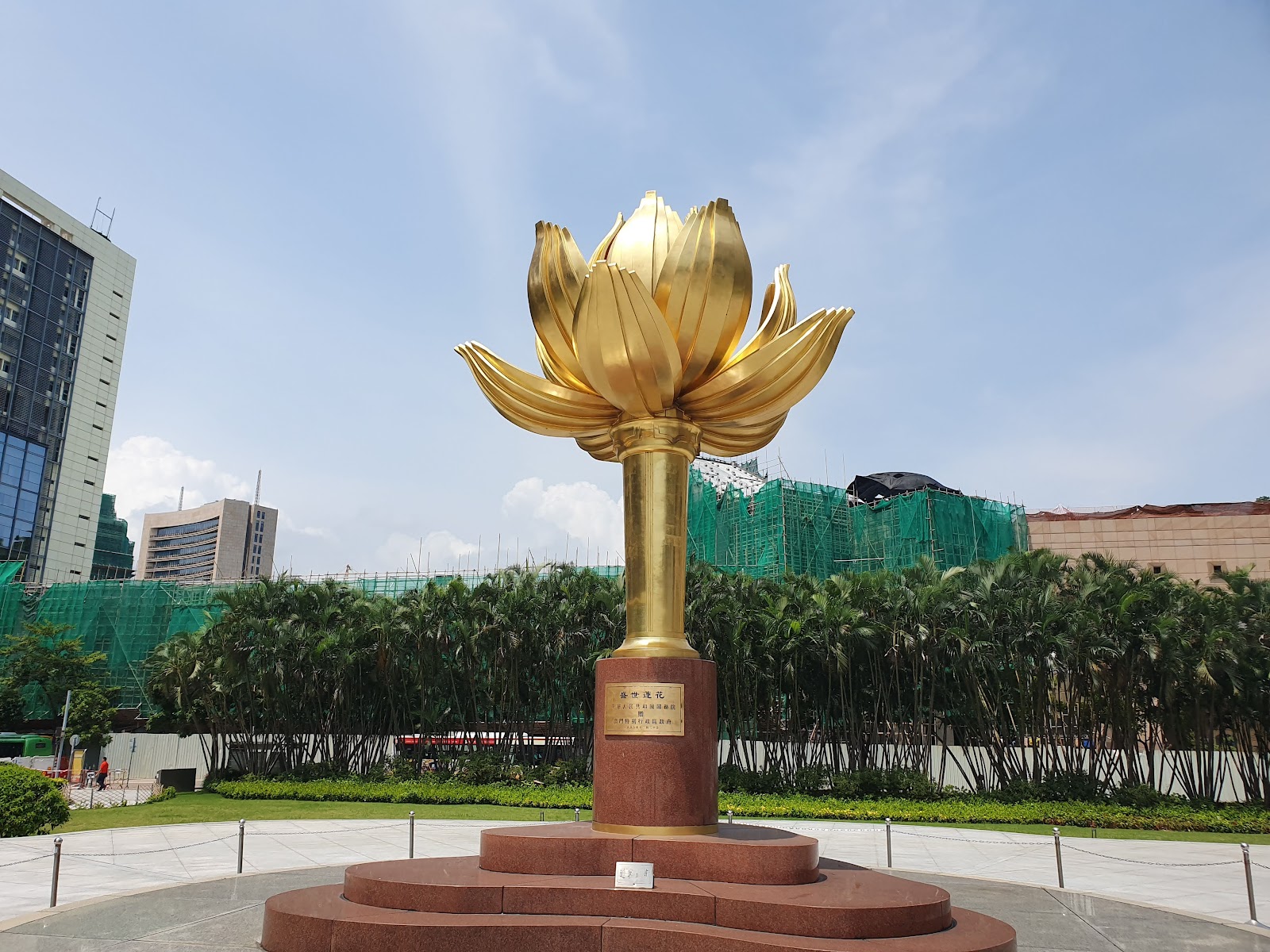
More photos
Photos published by travelers on Google, not AI generated.
What stands out
- Large bronze lotus sculpture
- 1999 handover symbolism
- Open public square
- Next to Macau Grand Prix Museum
- Convenient stop near bus transport
Worth knowing
- No lights at night
- Queues for photographs
- Tour groups can make it busy
Don't miss
What comes up most in public reviews
- Photograph the golden lotus sculpture
- Read the landmark’s handover symbolism
- Pair it with the Macau Grand Prix Museum
- Continue to Fisherman’s Wharf
Worth the trip?
What Lotus Square is
Lotus Square is an open public space in central Macau, China, centred on a large bronze lotus sculpture. Public reviews give the landmark 4 out of 5 from 257 reviews. The sculpture represents Macau’s handover from Portugal to China in 1999 and uses the lotus flower as a symbol of prosperity.
The main attraction is the sculpture itself. Its petals are arranged in three layers, creating a broad golden form that stands out against the surrounding city. The square is not presented in the reviews as a place for a long visit. It works better as a brief stop during a sightseeing route around the Macau Peninsula.
What visitors do there
Photography is the main reason to visit. Reviews repeatedly describe the square as a convenient place to take pictures, with the lotus sculpture providing the clear focal point. The open layout makes the landmark easy to see after arriving by bus, and the square is described as open around the clock.
Visitors should expect other tourist groups, particularly during organised sightseeing stops. One review says people may need to queue for photographs. That matters more here than finding somewhere to linger. The visit is straightforward: walk into the square, see the sculpture, take photographs and continue to the next stop.
The reviews also mention a public toilet at the site, available without charge. That practical detail makes Lotus Square useful within a longer walking or bus-based itinerary, especially when it is combined with nearby attractions.
When to go
Daytime is the clear choice. One reviewer specifically notes that there are no lights at night and recommends visiting during the day. Daylight also gives the bronze sculpture its strongest visual presence in photographs.
The square is described as open 24 hours, but that does not make every hour equally worthwhile. An evening visit may offer less to see if the sculpture and surrounding space are not illuminated. Visitors arriving with a tour group should allow extra time for photographs, since queues can form.
How to fit it into a Macau visit
Lotus Square is next to the Macau Grand Prix Museum, making the two sites a natural pairing. Reviews also describe continuing on to Fisherman’s Wharf after the square. The location suits travellers building a sequence of short stops around the Macau Peninsula rather than those seeking a major standalone attraction.
A practical plan is to arrive during the day, photograph the lotus, use the public facilities if needed and then walk or take transport to the nearby museum or Fisherman’s Wharf. There is no entrance charge mentioned in the supplied reviews, and no ticketing process is described.
The landmark is best judged as a concise cultural and photographic stop. It has a clear historical meaning, simple access and little need for advance planning. Travellers wanting a quiet evening spectacle should look elsewhere. For a daytime Macau city tour, it earns its place on the route.
Plan the rest of the trip
Ask anything
Looking for somewhere else?
Keep exploring
More from Macau

Macau
The Cotai Strip: Macau’s Neon Hotel Wonderland
The Cotai Strip brings casinos, enormous resort hotels and playful European replicas together in Macau, with the strongest atmosphere after dark.
Macau
A-Ma Cultural Village: A Quiet Temple Above Coloane
This hillside temple complex combines religious significance, steep approaches and broad views over Macau’s southern landscape.
Macau
Templo de Kun Iam, a calm Macau temple with layers of history
Public reviews praise Templo de Kun Iam for its peaceful atmosphere, dense collection of statues and long-standing place in Macau’s religious history.
Macau
Cathedral of the Nativity of Our Lady, Macau
A peaceful cathedral near Senado Square, praised in public reviews for its ornate interior, historic character and calm atmosphere.