Kalan Minaret, Bukhara’s Defining Brick Landmark
Public reviews praise Kalan Minaret for its patterned brickwork, commanding presence and striking illumination after dark.
More photos
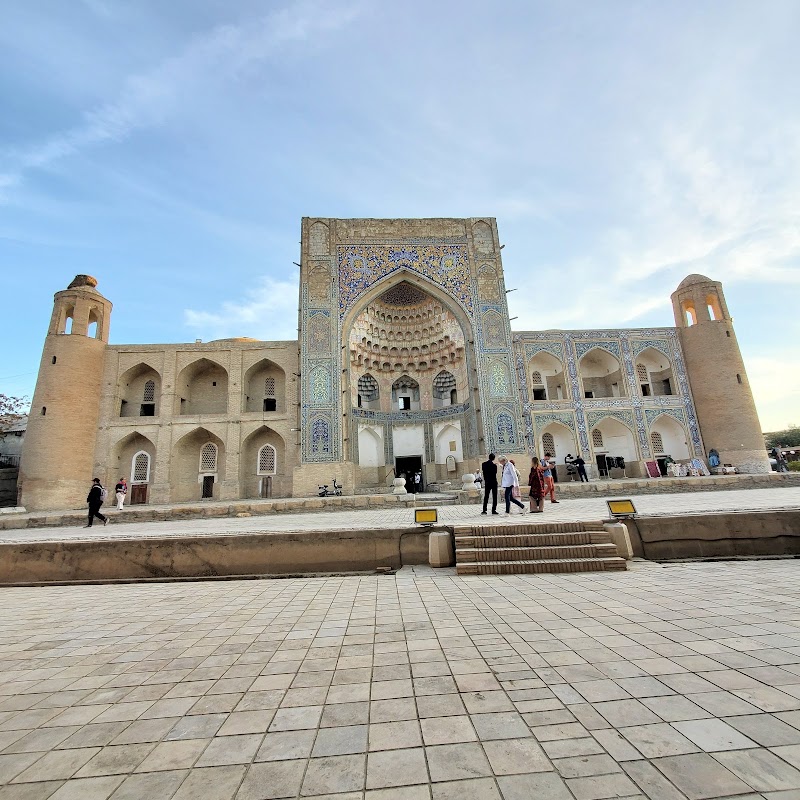
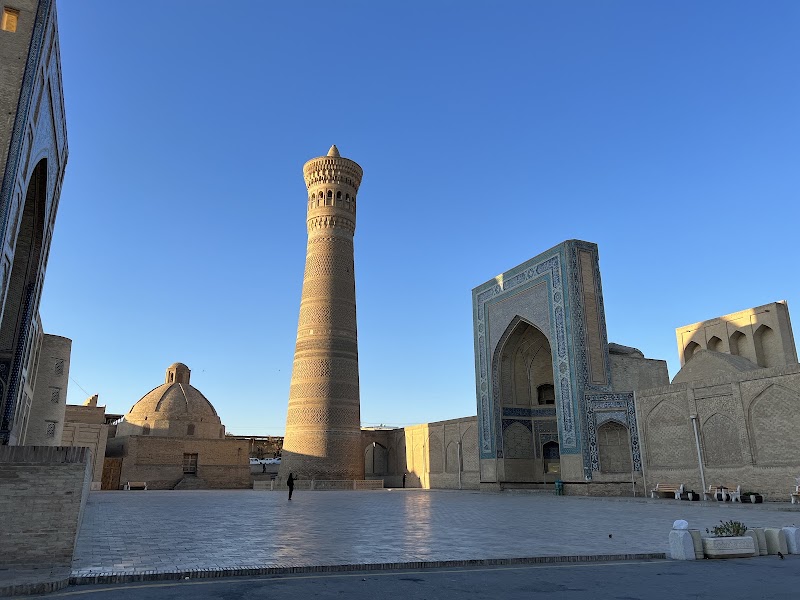
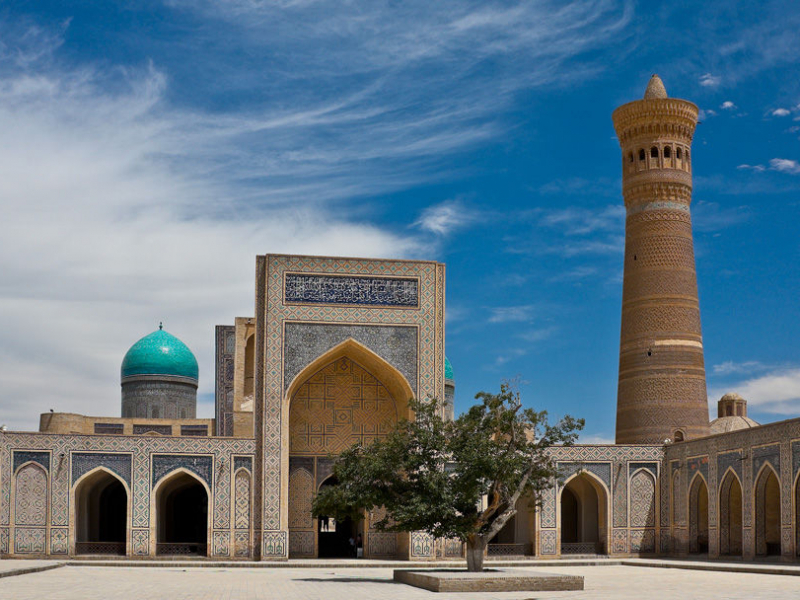
Photos published by travelers on Google, not AI generated.
What stands out
- Intricate patterned brickwork
- Views from around the square
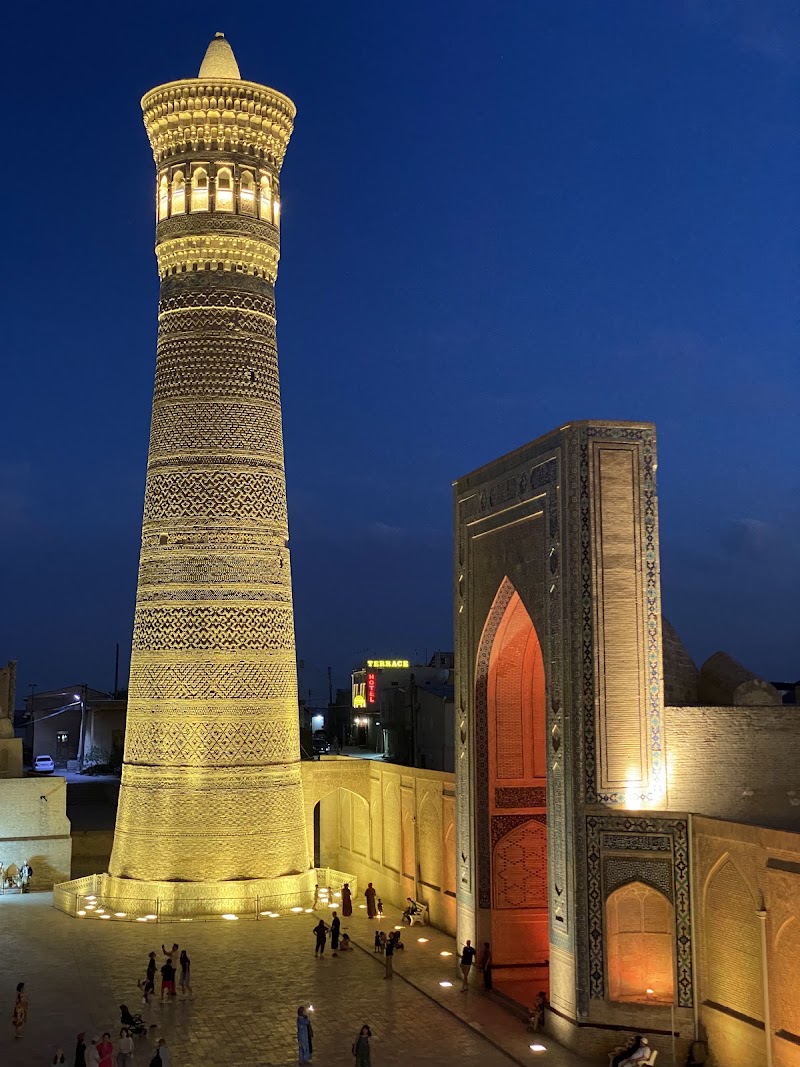
- Illuminated night-time silhouette
- Bukhara skyline presence
- Setting beside mosque and madrasa
Worth knowing
- The square becomes livelier from mid-afternoon onward
Don't miss
What comes up most in public reviews
- Walk around the square for multiple angles
- See the minaret from opposite Kalan Mosque
- Continue past the working madrasa
- Return after dark for the illumination
Worth the trip?
Why it stands out
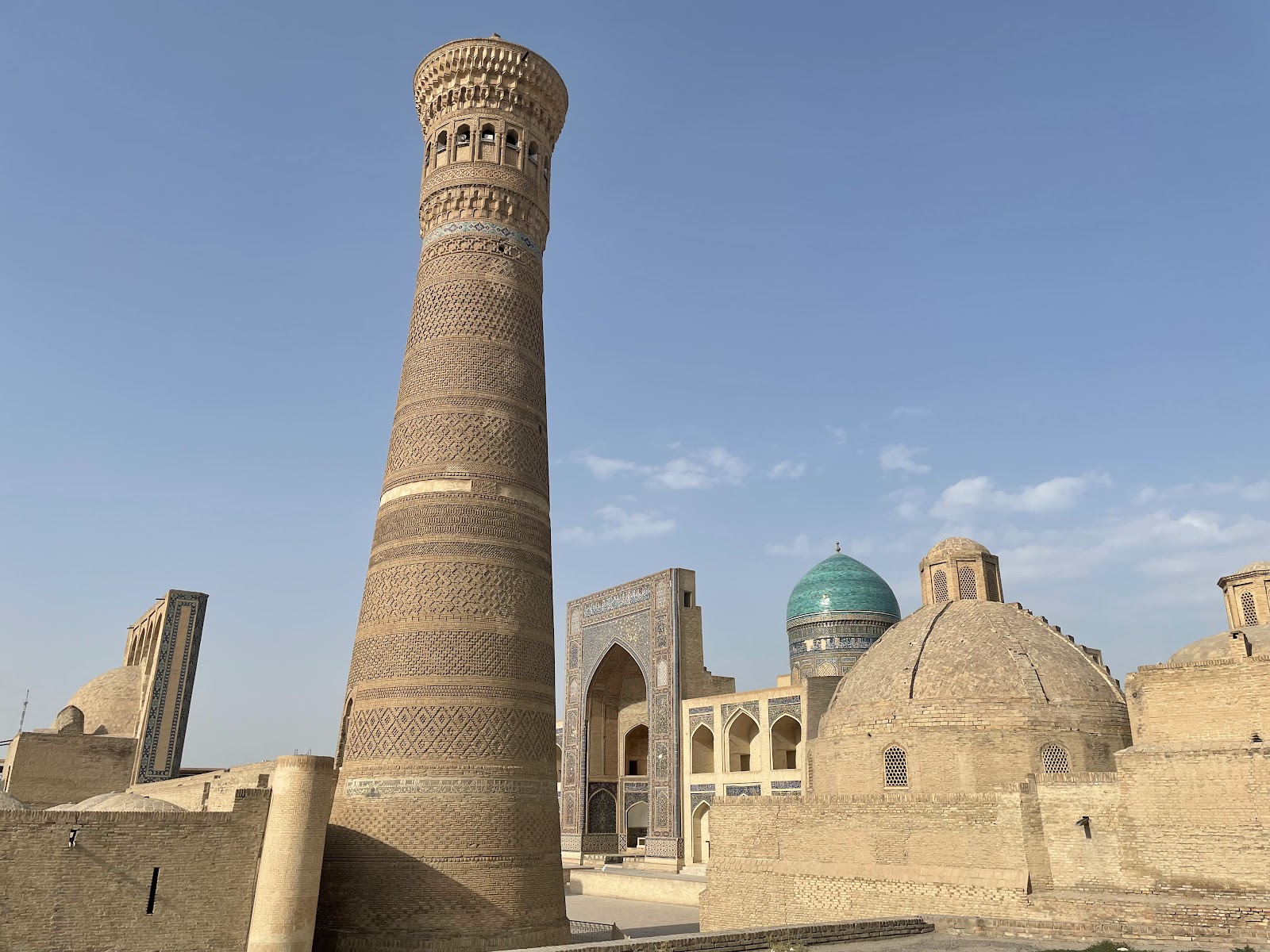
Kalan Minaret is one of Bukhara’s most recognisable sights, earning a Google rating of 4.8 from 1979 reviews. Public feedback consistently places it at the visual and atmospheric centre of the city’s historic core. Reviewers describe a structure that commands attention from across the square, yet rewards a closer look with detailed brick patterns and careful craftsmanship.
Its scale is central to that appeal. One review identifies the minaret as a 47-metre baked-brick tower dating to 1127, while others focus less on measurements and more on how dramatically it shapes Bukhara’s skyline. The effect is both monumental and surprisingly intricate. From a distance, the tower acts as a strong vertical marker. Up close, its bands of geometric decoration become the focus.
The best way to see it
Reviews repeatedly recommend walking around the surrounding square rather than settling for a single viewpoint. The minaret changes character depending on the angle, particularly when seen in relation to Kalan Mosque and the nearby working madrasa. Moving beyond the main frontal view also reveals how naturally the tower anchors the wider architectural ensemble.
That makes this more than a quick photo stop. Visitors who take time to circle the square can compare the minaret’s patterned surface, proportions and silhouette against the surrounding buildings. The square itself provides enough open space for broad views, while the closer approaches bring out the texture of the restored brickwork.
Photography is a major part of the experience, but the strongest reviews suggest that the landmark’s appeal is not limited to a single image. Its visual impact comes from the combination of height, craftsmanship and setting.
From afternoon activity to night-time drama
The atmosphere shifts noticeably through the day. Public reviews describe the area as especially lively from mid-afternoon into late evening, when visitors, local vendors and chaikhanas bring more activity to the square. Travellers seeking a quieter look may prefer an earlier visit, while those interested in atmosphere are likely to enjoy the later hours.
After dark, lighting gives the minaret a sharply defined silhouette. Reviewers compare its illuminated form to a candle above the old city and repeatedly single out the night view as a highlight. A late-afternoon arrival works particularly well because it allows the brick detail to be seen in daylight before the lighting transforms the scene.
History and overall verdict
The minaret is also widely associated in reviews with the name “Tower of Death,” reflecting darker stories attached to its past. Reviewers additionally recount traditions concerning its survival during Genghis Khan’s invasion, though these are often presented through local storytelling rather than as straightforward visitor information.
Even without delving deeply into those accounts, Kalan Minaret succeeds as a landmark through sheer presence. The near-consensus in public feedback is that it is essential to understanding Bukhara’s historic skyline. Its strongest qualities are easy to appreciate: richly worked brick, commanding scale, multiple rewarding viewpoints and memorable illumination at night.
Ask anything
Looking for somewhere else?
Keep exploring around Buxoro
More from Uzbekistan
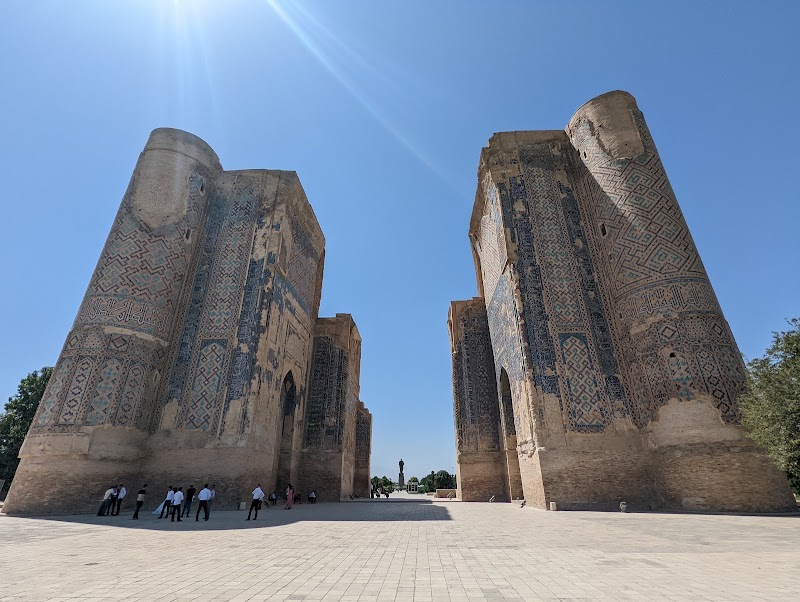
Uzbekistan · Shahrisabz
Ak-Saray Palace: Monumental Ruins in Shahrisabz
Timur’s ruined palace impresses with its towering portal and massive walls, though the journey from Samarkand divides opinion.
Uzbekistan · Samarqand
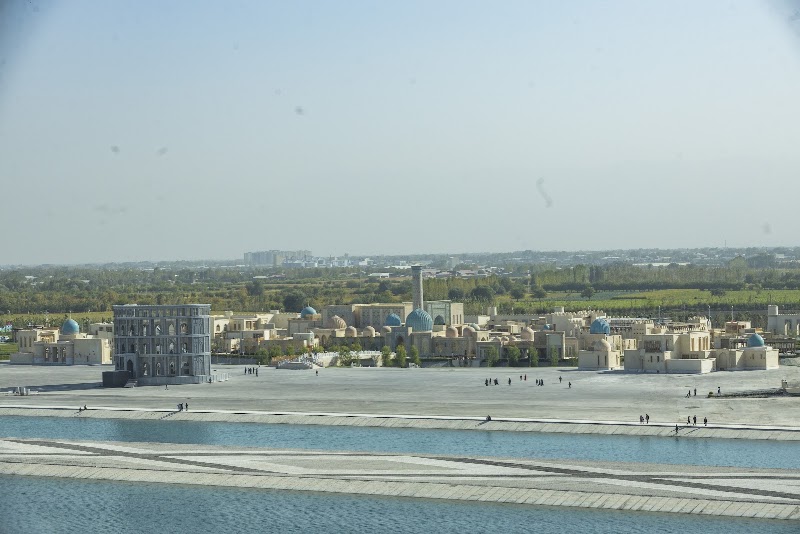
The Eternal City: a polished take on Silk Road Samarkand
The Eternal City is a polished Silk Road-themed ethnopark for photos, food and evening strolls, though reviews question its authenticity and convenience.
Uzbekistan · Khiva
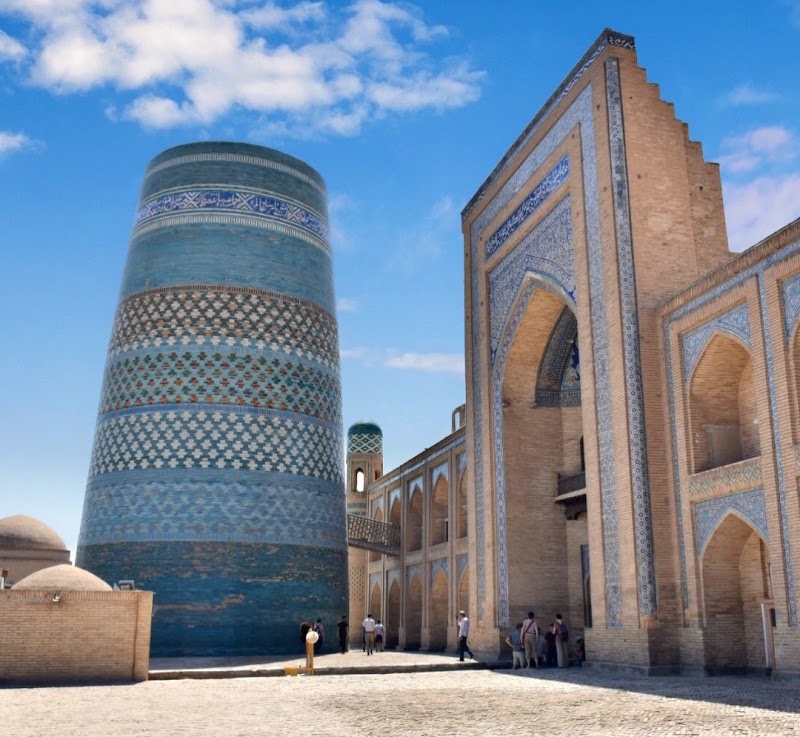
Kalta Minor Minaret: Khiva’s Unfinished Turquoise Icon
This broad, brilliantly tiled minaret near Ichan-Qala’s western gate is one of Khiva’s most recognisable landmarks and photo stops.
Uzbekistan · Samarqand
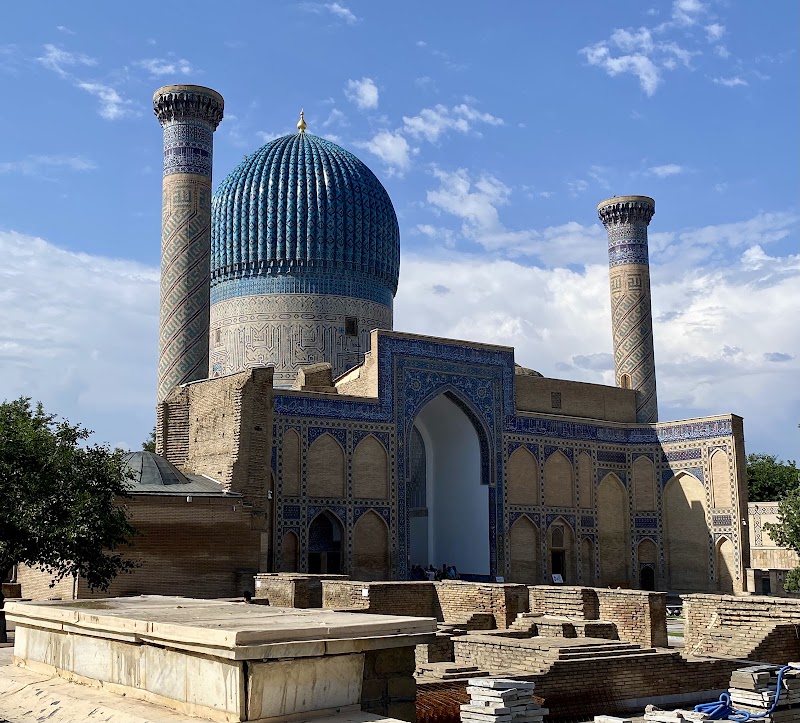
Amir Temur Mausoleum: Samarkand’s Timurid Landmark
Public reviews praise Gur-i Amir’s blue dome, ornate tilework and historical weight, though some visitors question the value of its compact interior.