Chilehaus: Hamburg’s Ship-Shaped Brick Landmark
This 1924 office building rewards a slow circuit with sharp angles, elaborate brickwork and views into Hamburg’s architectural history.
More photos
Photos published by travelers on Google, not AI generated.
What stands out
- Ship-like pointed corner
- Brick Expressionist façade
- Intricate masonry details
- White windows against dark brick
- Courtyards with cafés and restaurants
Worth knowing
- Primarily an exterior sightseeing stop
- Still functions as an office building
Don't miss
What comes up most in public reviews
- Walk all the way around the building
- Photograph the sharp bow-like corner
- Inspect the detailed brickwork
- Explore the larger courtyard
- See the neighboring Kontorhaus architecture
Worth the trip?
Why Chilehaus stands out
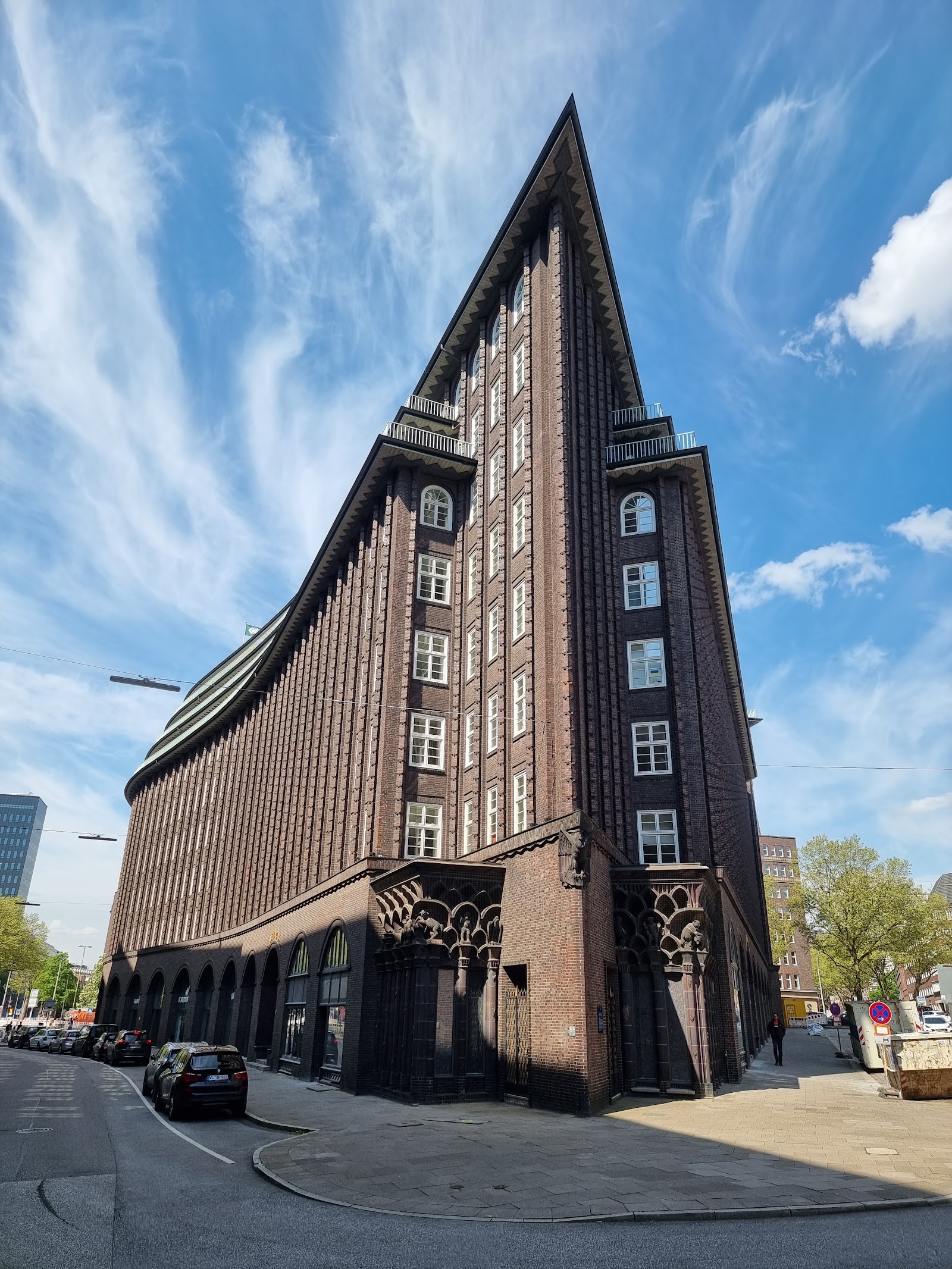
Chilehaus is among Hamburg’s most distinctive architectural landmarks, earning a Google rating of 4.5 from 3973 reviews. Public feedback repeatedly focuses on its dramatic silhouette, intricate masonry and importance as an example of Brick Expressionism. Designed by Fritz Höger and completed in 1924, the building forms part of the city’s UNESCO-listed Speicherstadt and Kontorhaus District.
Its defining feature is the acute eastern corner, where the walls converge like the bow of a ship. That nautical impression is central to the building’s appeal and explains why so many visitors describe it as especially photogenic. The rows of white-framed windows create a striking rhythm against the dark brick, while the enormous office block manages to look both monumental and unusually dynamic.
What visitors can see
Reviews suggest that Chilehaus is best appreciated by walking all the way around it. The appearance shifts with each turn: one side emphasizes its length, another reveals the sharp prow, and closer inspection brings out the patterns, curves and ornament worked into the brick façade. Several reviewers note that it offers rewarding compositions from almost every angle, rather than a single definitive viewpoint.
The courtyards and passages add another layer. Public comments mention related sections of the complex with the same architectural language, including a larger courtyard where restaurants and cafés can be found. These spaces help visitors understand Chilehaus not simply as a sculptural façade, but as a working commercial building designed around urban circulation.
Photography is one of the main reasons to stop. Wide views capture the ship-like form, while detail shots show the exceptional brickwork and the contrast between the masonry and white windows. The sharply pointed front is the obvious priority, though reviews indicate that restricting a visit to that one perspective misses much of the design.
How long to allow
A focused exterior visit generally suits a short stop of around 15 to 30 minutes. Architecture enthusiasts may want longer to circle the block, examine the brick detailing and continue through the neighboring Kontorhaus buildings. The surrounding district strengthens the experience, with Chilehaus acting as a natural starting point for looking at Hamburg’s historic office and warehouse architecture.
The building remains in office use, and public reviews indicate that general sightseeing is primarily focused on the exterior rather than interior access. Expectations should therefore be set accordingly. Its value lies in the façades, changing angles, courtyards and relationship with the wider streetscape.
Editorial verdict
Synthesized review sentiment is notably consistent: Chilehaus is admired for both its historical significance and visual impact. It works particularly well for architecture followers, photographers and travelers already exploring central Hamburg. The stop is brief, but the design rewards attention. A complete circuit, rather than a quick photograph of the pointed corner, provides the clearest sense of why this building remains such an important milestone in early modern office architecture.
Plan the rest of the trip
Ask anything
Looking for somewhere else?
Keep exploring around Hamburg
More from Germany
Germany · Hamburg
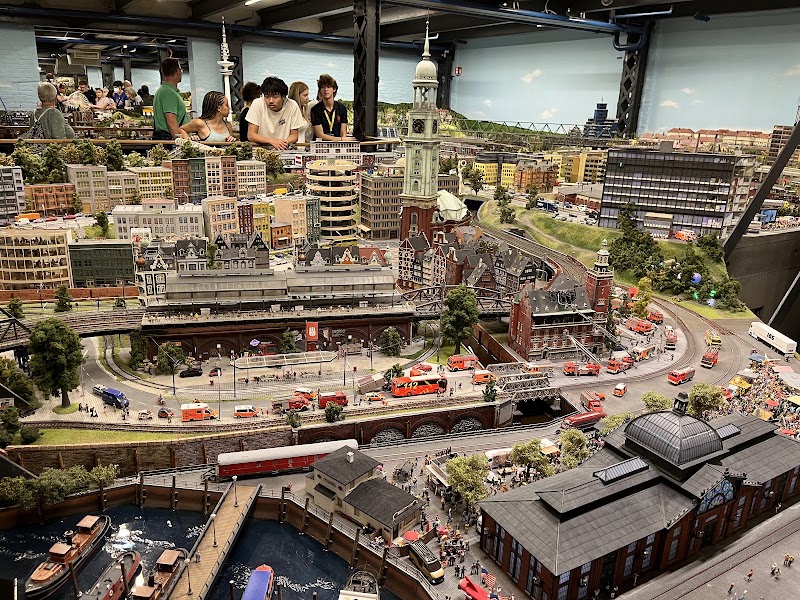
Miniatur Wunderland: Hamburg’s Small-Scale World in Remarkable Detail
Miniatur Wunderland turns trains, cities and landscapes into a richly detailed attraction that keeps adults and children searching for surprises.

Germany · Rüdesheim am Rhein
Niederwald Monument: Rhine Views and German History
The Niederwald Monument combines a major historic statue, landscaped grounds and wide Rhine views above Rüdesheim am Rhein.
Germany · Cochem
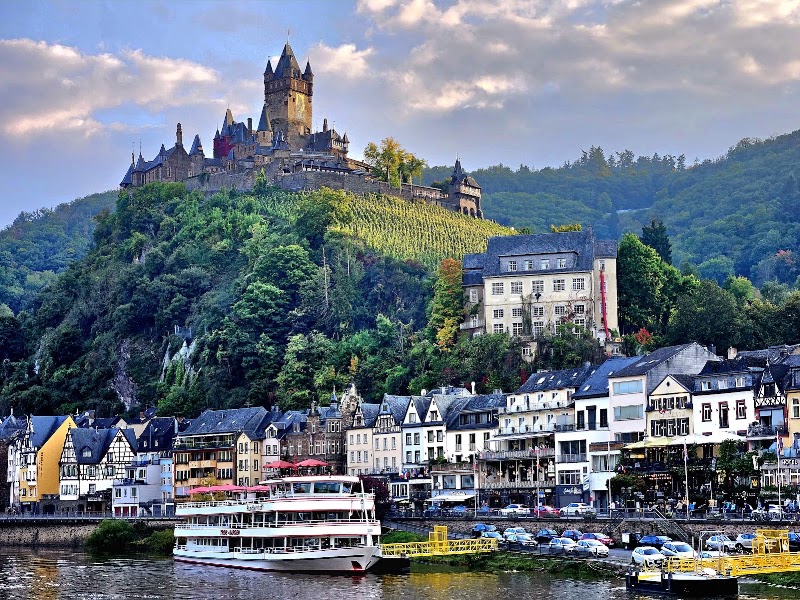
Cochem Castle Rewards the Climb with Moselle Valley Views
Reichsburg Cochem combines a steep approach, guided interiors and broad views over the town and Moselle Valley.

Germany · Vogtei
Centre of Germany: A Quiet Stop in Vogtei
Public reviews describe a clean, peaceful place near a lake, with one important caveat: visitors disagree about which point marks Germany’s true centre.